
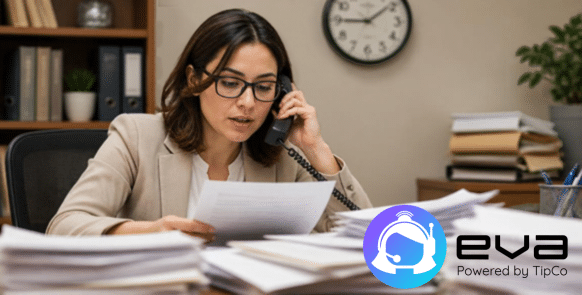

Every eligibility interview ends the same way: A caseworker reads the Rights and Responsibilities (R&R) aloud and captures the applicant’s signature. It’s required, it’s important, and it takes the same amount of time whether a case is simple or complex. Automating that recitation with AI gives caseworkers minutes back on every interview, and across a full caseload, those minutes add up to hours.
Here’s where the hidden cost comes from and how agencies are recovering that time.
What Is the Rights and Responsibilities (R&R) Recitation?
At the end of an interview for programs like the Supplemental Nutrition Assistance Program (SNAP), applicants must be informed of their federally mandated rights and responsibilities. That includes what they’re required to report, what happens if they don’t, and the protections they have. The applicant then acknowledges that they’ve received this information.
The language is scripted and required. The caseworker can’t shorten it, and it doesn’t change based on the household. That makes it an essential step, and also one of the most time-consuming, repetitive parts of the interview.
What Is the Hidden Cost of Manual R&R Recitations?
Because the recitation happens in every interview, its cost multiplies with caseload volume. According to TipCo’s customers, EVA R&R saves staff an average of 10 minutes per interview. At Greene County DSS in New York, staff reported saving 8–12 minutes per interview.
Here’s a simple example of how that adds up. At 10 minutes per recitation, a caseworker who completes six interviews in a day spends an hour on recitations alone. That’s an hour not spent processing cases, following up on documentation, or helping a household with a complicated situation.
The cost also shows up in less visible ways:
- Timeliness pressure. Minutes spent reading scripted language are minutes not spent moving cases forward.
- Worker fatigue. Reading the same script many times a day is draining, especially for already-stretched staff.
- Capacity limits. When agencies can’t hire, every minute of worker time matters more.
How Does AI Automate the Rights and Responsibilities Recitation?
EVA R&R recites the federally mandated rights and responsibilities, records the applicant’s audio signature, and creates a transcript. The caseworker still conducts the interview. EVA takes over only at the end, for the scripted recitation.
The process is customizable and can look something like:
- The caseworker completes the interview with the client.
- The caseworker lets the client know the call is being transferred to EVA.
- The caseworker calls EVA and provides the case number and the preferred language for the R&R.
- The caseworker connects the client with EVA and disconnects from the call.
- EVA recites the rights and responsibilities script and captures the client’s verbal attestation.
The transcript and verbal attestation are captured in EVA. Workers can then filter, view, and mark transcripts as processed.
Does Automating R&R Affect Compliance or Consistency?
Automation supports compliance. EVA R&R recites the agency’s approved, scripted language, so applicants hear the full required content each time. EVA R&R also:
- Captures audio signatures for compliance with customer agreements
- Creates transcripts for accountability and learning
- Offers the option of printed copies for transparency and trust
- Supports customized interactions tailored to each agency’s needs
Agencies stay in control of the content. During implementation, the agency approves the rights and responsibilities language EVA uses, then tests it before rollout.
Who Makes the Eligibility Decision?
The caseworker does. EVA doesn’t determine eligibility or make case decisions. Those stay with agency staff, where they belong.
Related reading: AI Should Assist, Not Decide: Building Trust in Person-Centered AI for Caseworkers
What Results Have Agencies Seen?
Greene County DSS began implementing EVA R&R in June 2024, when the agency was struggling with staffing. Commissioner Kira Pospesel explained: “I wasn’t able to hire even entry-level staff to work the phone lines because no one in the community was interested in that.” After implementing EVA R&R with EVA Phone, Greene County saw:
- SNAP timeliness improve from 55% to 85% (as of October 2026, 55% to 96%)
- Late SNAP cases drop from 24% to 0%
- Public Assistance case timeliness rose from 52% to 84% (as of October 2026, 52% to 96%)
- Overtime costs eliminated
Key Takeaways
- The rights and responsibilities recitation is required in every interview, so its time cost grows with caseload volume.
- EVA R&R saves staff an average of 10 minutes per interview, according to TipCo; Greene County DSS reported 8–12 minutes.
- EVA R&R recites the agency’s approved language, captures audio signatures, and creates transcripts.
- Caseworkers still conduct the interview and make all eligibility decisions.
- Greene County DSS improved SNAP timeliness from 55% to 96%, as of October 2026, after implementing EVA R&R and EVA Phone.
Frequently Asked Questions
Caseworkers and agency leaders often have questions about the cost of manually reciting a client’s rights and responsibilities, so we’ve answered the most common ones here.
What is the Rights and Responsibilities recitation in a SNAP interview?
It’s the required, scripted explanation of an applicant’s federally mandated rights and responsibilities, read at the end of the interview. The applicant then acknowledges receiving the information.
How much time does automating R&R save?
EVA R&R saves staff an average of 10 minutes per interview. Greene County DSS reported saving 8–12 minutes per interview.
Does the caseworker still conduct the interview?
Yes. The caseworker completes the interview, then transfers the client to EVA for the rights and responsibilities recitation and audio signature.
How are R&R recitations documented?
EVA R&R records the applicant’s audio signature and creates a transcript. Workers can filter, view, and process transcripts in EVA.
Can agencies customize the R&R language?
Yes. The agency approves the rights and responsibilities language EVA uses, and EVA R&R supports interactions tailored to each agency’s needs.
Does EVA R&R make eligibility decisions?
No. EVA R&R handles the scripted recitation and audio signature only. Eligibility decisions stay with agency staff.
See EVA in Action
Ready to give your caseworkers time back on every recitation? Book a demo to see how EVA R&R works.


